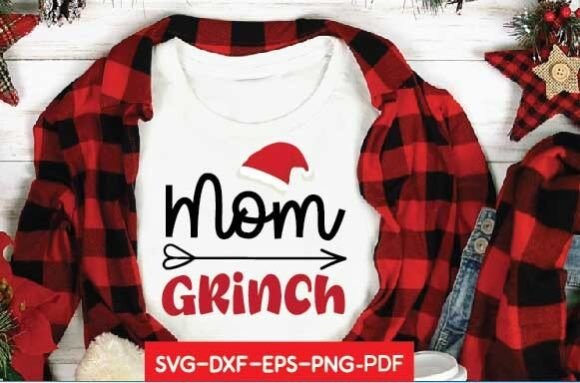
Mom Grinch Svg: Honest Design Review for Makers
The Personality Behind the Design
Right away, Mom Grinch Svg pulls off something clever. It borrows a familiar, mischievous holiday character and reframes it around motherhood — and that twist changes the whole mood. The design does not feel mean-spirited or cold. It feels playful, a little sarcastic in the best way, and surprisingly warm underneath the humor. That balance is exactly what makes a T-Shirt Designs graphic work in real life. People want something that gets a laugh but still feels affectionate. This one walks that line well.
When I first opened the file, I studied the shape language and the overall composition. The layout has a natural focal point, which is important if you are converting any Graphics asset into an embroidery project. Your eye lands where it should, and nothing fights for attention. The lettering — assuming it is part of the composition — reads clearly. That matters because embroidery thread does not forgive ambiguous curves or cramped spacing the way digital print does. A strong silhouette here gives me confidence that the design will hold up when translated into stitches.
Imagining This on a Holiday Sweatshirt
I kept picturing a specific scenario: a small shop owner preparing twelve custom embroidered sweatshirts for a local holiday market. The customer base skews toward moms who love a bit of seasonal attitude. They browse the booth, spot Mom Grinch Svg stitched across a crewneck in a deep forest green thread, and immediately grin. That is the reaction you want. The design does not need explanation. It works as a shortcut to a shared feeling — the exhaustion and joy and slightly chaotic energy of motherhood during the holidays.
For that project, I would probably size the design around seven to eight inches wide on an adult sweatshirt. That range gives the details enough room to breathe without overwhelming the garment. On a toddler hoodie or baby onesie, I would scale down cautiously — maybe four inches — and pay close attention to how the smaller elements hold up. Some machine embroidery design conversions lose clarity under four inches, especially if the original file has delicate lines or tight negative spaces. Testing on scrap fabric first is non-negotiable here.
Where the Design Shines Brightest
Some designs are versatile, and some have a clear home. Mom Grinch Svg leans toward the latter, and that is not a weakness. The theme is seasonal and specific, which means it performs best on products that embrace the holiday mood without apology. I would not force this onto a year-round product line. Instead, I would build a focused collection around it.
Here is where I see it thriving:
- Tote bags — especially canvas ones with a bit of texture. The design adds personality to a practical item and makes a great holiday gift bag replacement.
- Sweatshirts and crewnecks — the obvious choice. A cozy fabric plus a cheeky holiday design equals strong seller potential at craft fairs and on Etsy.
- Pillow covers — decorative throw pillows for the living room during December. These do well as hostess gifts.
- Kitchen towels — a smaller, lower-cost product that still carries the design's charm. Great for boutique displays.
- Baby onesies — the "mom" angle makes it adorable when the baby wears it. Parents eat this up.
- Embroidered patches — sew-on or iron-on patches are trending, and this design fits the patch format beautifully.
In each case, the applique design potential is worth exploring. A well-placed applique version could reduce stitch count and add tactile depth, especially on thicker fabrics like canvas totes or quilted pillow covers. The contrast between fabric and thread would give the design another layer of craftsmanship.
Tricky Surfaces and Small Details Worth Watching
No design works everywhere, and pretending otherwise leads to disappointing finished products. Mom Grinch Svg has some characteristics that demand thoughtful placement and material choices. The first concern is fabric texture. Anything with a deep nap — like fluffy fleece or sherpa — can swallow fine details and make lettering look blurry. A good stabilizer helps, but I would avoid highly textured surfaces unless you are confident in your hooping technique and willing to accept a softer result.
Stretchy fabrics need extra care. Knit t-shirts and thin jerseys shift under the needle, and designs with crisp edges or precise alignments will show every bit of distortion. A cutaway stabilizer is your friend here, along with a basting stitch to lock everything down before the main stitching begins. I have learned this the hard way on more than one rushed project.
Dark fabrics create a different challenge. If the original Graphics file depends on color contrast that disappears against black or navy, the stitched version loses impact. Always test the design in a black-and-white mockup before committing to thread colors. Sometimes a subtle outline or a shift in thread sheen — matte versus slight gloss — saves the whole look on darker backgrounds.
Curved surfaces like caps and hats are probably not the best fit unless you simplify the composition. The domed shape of a baseball cap distorts centered designs, and any lettering near the edges can warp awkwardly. I might use a simplified version of the design for cap embroidery, but the full composition likely belongs on flat or gently curved surfaces instead.
What Buyers Actually Notice
Over years of selling handmade embroidered goods, I have noticed something consistent. Customers react first to recognition, then to execution. They see Mom Grinch Svg and immediately understand the reference. That instant recognition builds a quick emotional connection. But what keeps them reaching for their wallet is the stitch quality. Clean lines, even satin stitch edges, and thoughtful thread colors tell the buyer this is a professionally made item, not a rushed hobby project.
The stitch density matters enormously for this kind of design. Too dense, and the fabric puckers and feels stiff. Too loose, and the design looks patchy and unfinished. Finding the sweet spot requires testing on the actual fabric you plan to sell. What works on a cotton tote may not translate to a blended sweatshirt. Your customers may never consciously notice these nuances, but they absolutely feel them when they hold the product.
Giftability is another factor I weigh heavily. A design that makes someone laugh while still feeling personal is exactly what gift shoppers hunt for. Mom Grinch Svg sits right in that pocket. It says something specific without being niche to the point of confusion. A daughter buying for her mom, a husband buying for his wife, a friend buying for a new mom — the use case is broad enough to capture multiple buyer types during the holiday season.
Practical Notes Before You Stitch
I always run through a mental checklist before committing any design to a client project or a batch of inventory. Here is what I would verify with Mom Grinch Svg before producing anything for sale:
- Test on scrap fabric first. Always. Use the same fabric type and color you intend for the final product. This single step catches most problems before they become expensive mistakes.
- Check thread color contrast. Hold the stitched sample under different lighting — daylight, warm indoor light, booth lighting if you sell at markets. Thread colors shift more than people expect.
- Review stitch density settings. If you are digitizing from the SVG file yourself, pay extra attention to how the fill stitches behave in larger areas and how the running stitch outlines frame the shapes.
- Confirm hoop size compatibility. Measure the actual stitched area, not just the design file dimensions. Leave enough margin for proper hooping without crowding the frame edges.
- Inspect small details closely. Any tiny gaps, thin lines, or tightly spaced elements in the SVG may need adjustment before or after digitizing. What looks fine on screen can become a tangled mess under the needle.
- Test on both light and dark fabrics. A design that pops on white may disappear on charcoal. Do not assume versatility.
- Use proper stabilizer for your fabric type. Cutaway for knits, tear-away for wovens, and a topper for fluffy or textured surfaces. This discipline separates professional results from amateur ones.
- Verify commercial licensing. Before selling finished products or including the design in a digital embroidery file bundle, confirm what the license allows. Some SVG files are personal use only, and assuming otherwise can create legal headaches down the road. The product description indicates this is an instant download compatible with software like Cricut and Silhouette, but that does not automatically clarify the commercial embroidery rights — so check.
How It Fits Into a Craft Business
For Etsy sellers and small shop owners, seasonal designs like Mom Grinch Svg play a specific role in the product lineup. They create urgency and give buyers a reason to purchase now rather than later. The window is shorter than everyday designs, but the emotional pull is stronger. I have watched holiday-themed embroidered items outsell generic designs three to one during November and December.
This design works as a standalone piece on a custom apparel item, but it also pairs well with coordinating designs in a holiday collection. A matching set — mom's sweatshirt, baby's onesie, a coordinating tote bag design — increases average order value and makes your shop feel curated rather than scattered. Customers browsing for holiday embroidery gifts often buy multiple items when the collection feels intentional.
The printable mockup potential also deserves a mention. If you sell digital embroidery files rather than finished products, including a clean, realistic mockup of the stitched design helps buyers visualize the result. A well-presented mockup builds trust and reduces return requests. Show the design on at least two different fabric colors and at a realistic size. Sellers who invest in presentation almost always see better conversion rates for their design assets.
Final Thoughts From the Worktable
I like Mom Grinch Svg for what it is — a seasonal, personality-driven design that understands its audience. It does not try to be everything to everyone, and that focus makes it stronger. The holiday mom who laughs at the chaos of December will feel seen. The gift buyer searching for something a little less generic will stop scrolling. And the maker who stitches it carefully onto a quality blank will end up with a finished product that moves quickly at a fair price.
Just do the testing. Check the licensing. Choose your fabrics wisely. And when you stitch that first good sample and hold it up — you will know whether it belongs in your shop. I suspect for many makers, the answer will be yes.