I Survived Cyber Monday: Graphics & T-Shirt Designs
As a graphic designer who regularly sources assets for client branding and e‑commerce product lines, I evaluate every download based on how it actually performs under real deadlines. The “I Survived Cyber Monday” graphic immediately caught my attention. It is not just a simple text line; it is a cultural wink that can turn a plain t‑shirt or mug into a conversation starter. The design sits squarely in the humor‑meets‑relatability category that dominates modern merchandising, especially for small business owners and print‑on‑demand sellers.
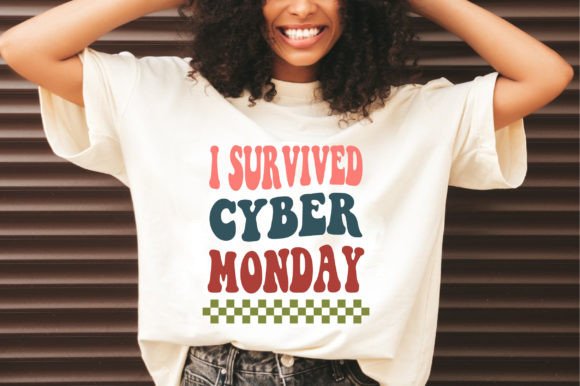
The first render I opened was the high‑resolution 300 DPI PNG. The crisp edges and the deliberate typographic treatment made it clear that this was built for production. Whether the lettering leans into a bold sans serif, a distressed grunge look, or a hand‑lettered script, the mood is consistent: casual, triumphant, and slightly playful. I immediately pictured it splashed across a unisex tee for a local boutique’s post–Cyber Monday sale thank‑you event.
The Creative Problem This Design Solves
In a real client scenario, I recently worked with a handmade candle brand that wanted to launch a limited‑edition gift set for shoppers who survived the busiest online shopping weekend of the year. They needed a visual anchor—something that felt like a badge of honor. “I Survived Cyber Monday” became the perfect rallying cry. It gave their packaging design an instant personality, turning a simple soy candle jar into a collectible keepsake. For crafters and Cricut users, the same graphic can be cut from adhesive vinyl and applied to laptop lids, water bottles, or tote bags. Its versatility across physical products and digital marketing visuals makes it a true commercial design asset.
Where the Graphic Adds Maximum Value
- T‑shirt design – Center chest prints or oversized back placements immediately benefit from a statement piece like this.
- Mugs and tumblers – On a curved surface, a compact and bold text layout remains legible even when viewed from across the room.
- Sticker design and decals – The DXF and SVG formats allow you to produce kiss‑cut stickers for planners, car windows, or laptop decorations.
- Social media graphics – Use it as an Instagram post or Pinterest pin overlay to announce post‑sale deals, shipping updates, or humorous recaps.
- Packaging design – Add it as a subtle accent inside a box lid or on a tissue paper pattern for e‑commerce shipments.
- Editorial and blog visuals – If you run a newsletter or online magazine that covers retail trends, this graphic can visually punctuate your content.
- Sublimation design – The vector files transfer cleanly onto polyester shirts, ceramic tiles, and phone cases without losing detail.
- Canva template – Drop the PNG into a ready‑made Canva frame and you have a quick, shareable campaign visual.
Readability and Visual Hierarchy in Real Layouts
Every designer knows that a charismatic headline graphic can fail if it doesn’t respect hierarchy. With “I Survived Cyber Monday”, the heavy lifting is already done by the typography itself. The text is meant to be read first, so it naturally grabs the primary position. I advise leaving generous negative space around it. On a t‑shirt mockup, it shines when placed on a solid background color, away from competing imagery. When used on a product label, consider scaling it down just enough to let a sub‑heading or brand logo sit comfortably below. Test it against both serif fonts for a more editorial feel and sans serif fonts for a clean, modern look. Pairing this bold statement graphic with a delicate script font for a secondary message can create an attractive contrast.
Potential Pitfalls and When to Scale Back
There are moments when this graphic might work against your design goals. At extremely small sizes, under about two inches wide, some letterform details can blur—especially if the PNG is not scaled correctly or the printing method is low fidelity. If your project demands a minimalist, high‑end corporate aesthetic, humor‑driven graphics like this one can clash. Also, be cautious with complex backgrounds: busy photographic mockups or heavily patterned surfaces can swallow the text. For web use, always check contrast ratios; light gray text on a white background will not survive busy feeds. I always recommend a quick black‑and‑white preview. If the message loses its punch in grayscale, adjust the background color contrast or add a subtle drop shadow in your layout program.
File Formats, Editability, and What to Check Before Using
The product package includes PNG at 300 DPI, EPS, SVG, and DXF—a robust toolkit for a graphic designer. The EPS and SVG formats are particularly valuable because they often permit full vector editing. I always open these in Adobe Illustrator or Affinity Designer to check if the text is outlined or still editable. Outlined text gives you peace of mind for scaling and color changes, but if you need to tweak the actual wording, an editable version saves hours. The high‑resolution PNG is ready for immediate mockup work. I drag it onto product shots for client previews, and the transparent background keeps the composition clean. For Cricut crafters, the SVG and DXF files mean you can send the design straight to Design Space without extra tracing. Sublimation designers will appreciate the vector files for clean transfers, while sticker makers can immediately use the DXF for contour cutting.
Commercial License and Client‑Safe Usage
Before delivering any final product to a client or uploading to a print‑on‑demand platform, verify the commercial license that accompanies this design asset. Most reputable listings from established creative marketplaces allow use on merchandise for sale, but it is never safe to assume. If you plan to use “I Survived Cyber Monday” on Etsy products, in a Canva template you sell, or as part of a logo design for a small business branding package, the license must explicitly cover those uses. I keep a folder with screenshot copies of license terms for every digital product I purchase. This small habit has protected multiple client projects from copyright disputes down the line.
Pressure‑Testing the Design Across Multiple Mediums
To objectively judge this graphic, I printed it on a standard inkjet and on a professional heat transfer sheet. The thick, substantial strokes held up beautifully; there was no ink bleeding, and the edges stayed sharp. I then loaded the SVG into my Cricut Maker and cut a sample from permanent vinyl. The cut lines followed the letterforms perfectly, with no unwanted bridges. In a product mockup environment, dropping the PNG onto a black hoodie required one quick brightness adjustment to make the white text pop, while the same file on a natural cotton tote bag needed almost no tweaking. These small real‑world experiments confirmed that the file is not just a pretty preview—it is genuinely production‑ready.
Who Should Add This to Their Design Library
This graphic design asset is a strong fit for creative entrepreneurs who sell on Etsy or Shopify, print‑on‑demand sellers building seasonal collections, social media managers looking for ready‑made campaign visuals, and crafters who need instant SVG designs for weekend projects. It also works well for marketing professionals crafting internal office swag or team morale stickers after a grueling sales event. If your brand voice leans witty, inclusive, and conversational, “I Survived Cyber Monday” can reinforce that tone across multiple touchpoints.
Ultimately, what makes this graphic useful is not just the phrase itself but the thorough file preparation behind it. Having vector AI, EPS, SVG, and high‑resolution PNG in one package means you spend less time converting files and more time designing the final product. In a fast‑paced creative workflow, that efficiency is everything. For my own projects, I now keep this file stored in my “Holiday Campaigns” folder, right next to other typographic assets that help small businesses connect with their audience through humor and authenticity. It is a small but mighty tool in a designer’s commercial toolkit.