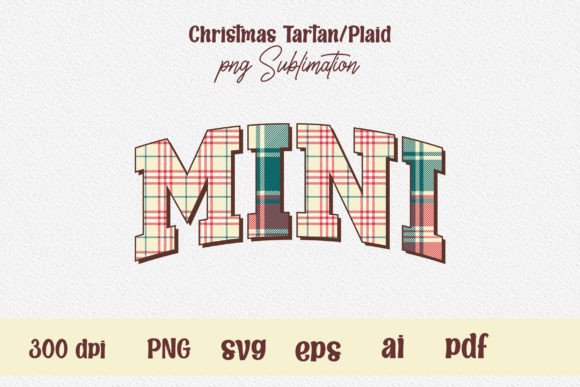
Christmas Plaid Mini PNG Sublimation Graphics for T-Shirt Designs
I opened the folder and the first thing that hit me was how well this plaid leaned into a homemade holiday feeling without looking generic. The colours aren’t the oversaturated red and green you see on dollar-store wrapping paper; they have a slightly muted, heritage warmth. For a graphic design asset aimed at small business projects, that matters immediately. A client who runs a handmade business or boutique product line doesn’t want their seasonal branding to scream mass-market. They want something that feels intentional and personal. Christmas Plaid Mini PNG Sublimation delivers exactly that tone.
The mini scale of the plaid pattern is the real decision-maker here. Instead of a bold, oversized buffalo check that competes with every other design element, this stays in the background as a textural layer. I tested it in a few quick mockups for a hypothetical client – a ceramic ornament studio refreshing their Etsy product visuals for December – and the plaid added just enough seasonal narrative without overpowering the product photography. That’s a rare quality in a sublimation design, especially one generated specifically for print-on-demand t-shirt designs and merchandise.
First Look: A Warm, Versatile Plaid That Leans Nostalgic
The overall mood feels like a craft market stall at dusk. There’s a sense of comfort, nostalgia, and approachable coziness. Because the reds contain a hint of burgundy and the greens lean slightly forest, the palette avoids the candy-cane brightness that can make a design asset feel disposable after December 25th. This makes Christmas Plaid Mini PNG Sublimation extendable into winter-themed packaging design or early January social media graphics for brands that want to soften their seasonal transition rather than cut it off abruptly.
For a T-shirt design specifically, the mini repeat keeps the garment looking more like a curated lifestyle product than a novelty holiday tee. When I placed the transparent PNG on a heather grey crewneck and a cream canvas tote, the plaid acted almost like a subtle tiling backdrop that supports foreground typography beautifully. It gave me the impression of a heritage-inspired look without the complexity of a full all-over-print pattern that can feel chaotic on smaller fabric panels.
The Client Project: Handmade Holiday Branding That Needs Consistency
Let me ground this in a realistic brief. I’m working with a small-batch candlemaker who sells primarily through her website, a local pop-up, and a small wholesale line to gift shops. She needed a cohesive visual direction for her “Winter Gatherings” collection: candles, reed diffusers, matchbox labels, a small run of staff t-shirts, and a suite of social media graphics. Budget was tight, so commissioning an entirely custom repeating pattern wasn’t feasible. I needed a design asset that could tie product labels, tissue paper wraps, a Canva template for Instagram, and a simple rectangular sticker design together seamlessly.
Christmas Plaid Mini PNG Sublimation became the backbone. Because the files include a high-resolution PNG (4500×5400 pixels at 300 dpi) with transparent background, I could layer it directly under a clean sans serif logo and a script font tagline for the jar labels. The plaid stayed subtle under a 40% opacity white overlay for the round candle lid stickers, yet could run at full saturation on the chest print of a unisex t-shirt. In one project, the pattern delivered everything from crisp merchandise branding to moody editorial-style social posts. That kind of creative adaptability is why I value well-made design bundles.
Where the Christmas Plaid Mini PNG Sublimation Excels
I’ve found at least five application zones where this graphic design asset genuinely shines. First, hero graphics and backgrounds for product mockups: the tight repeat and neutral-yet-warm palette let you drop a plain object in front of this plaid and instantly create a seasonal scene without extra propping. Second, printable wall art and greeting cards: because the plaid reads as texture, you can overlay a crisp holiday quote in a display font and sell it as a digital download or physical card. Third, packaging details and belly bands: a small strip of this pattern wrapped around a kraft box adds enormous perceived value for handcrafted items. Fourth, small-run t-shirt designs and tote bags: sublimation prints love contiguous, dense patterns with no thin hairlines, and this holds up well. Fifth, social media graphics and Pinterest pins: the plaid acts as a seasonal frame or footer without distracting from the central message.
I particularly appreciated how the SVG and AI files let me extract and recolor individual plaid stripes for a secondary version that matched the client’s brand palette more closely. I pulled the red out, shifted it slightly towards a rust tone, and immediately had a custom variation that still felt coherent with the original sublimation design. For Cricut users and sticker designers, this also means you can create coordinating layered vinyl decals with a modified colour story while keeping the overall design language consistent.
When to Pull Back: Cautionary Contexts for This Sublimation Design
Not every project can support a repeating plaid, even one as well-constructed as this. I would use this asset carefully – or not at all – in minimalist branding where visual silence is the primary brand identity. If a client’s logo is already highly detailed or contains its own pattern, adding Christmas Plaid Mini PNG Sublimation as a background risks visual clutter that distracts instead of enhancing. In those cases, I’d limit the pattern to a very small accent, like a gift card insert or a hang tag, and avoid placing it behind the core logo altogether.
Platforms with tiny rendering spaces are another concern. The mini plaid relies on seeing the repeat rhythm to register as a plaid. On a favicon or a one-inch promotional pin, the lines can blur into a muddy block. I tested a reduced version at 120 pixels wide and the plaid lost legibility; it became a speckled fabric that didn’t convey the intended heritage feel. For web headers and large editorial layouts, it performs beautifully, but I’d hesitate before using it as a social media profile frame without a simplified alternative.
Corporate holiday communications present a different challenge. In a professional setting with strict visual hierarchy standards, pattern behind body text can decrease readability. I always run the contrast and legibility check: set a sample paragraph in a light serif and a medium-weight sans serif over the plaid and see at what zoom level the text becomes uncomfortable to read. In my tests, white headlines over the original unmodified plaid held up at 18pt and above, but smaller body copy needed an opaque ribbon or dark solid block behind it.
How the Pattern Affects Readability and Visual Hierarchy
With any patterned background, the designer’s first job is to protect the message. Christmas Plaid Mini PNG Sublimation is busy enough that you must consciously build layering strength. I found that pairing it with bold, condensed sans serif fonts gave the quickest win, especially in white. The white-on-plaid treatment works remarkably well because the plaid’s colors are mid-tone; pure white type pops with a striking seasonal clarity that feels like a ski lodge poster rather than a craft project. For a more elegant direction, a heavy script font in black with a subtle white stroke created a beautiful contrast for a save-the-date card concept.
Test this graphic design asset against serif, sans serif, script, handwritten, and display font families. I found that thin serifs got lost, while chunky slab serifs held their own. Handwritten fonts with inconsistent stroke widths became illegible unless enlarged significantly. That’s useful information if you’re creating an Etsy product listing or a t-shirt design where the text needs to be read from a short distance. Always preview the design at actual print size; what looks charming on a MacBook screen might be an unreadable jumble on a Cricut-printed tote.
The Asset Breakdown: File Formats and Designer Flexibility
The download includes a well-organized set: one PNG, one EPS, one AI, one SVG, and one PDF. The PNG is the immediate workhorse for anyone working in raster-based workflows – Canva templates, Photoshop mockups, and direct digital product creation. Its transparent background means you can drop it over any colored base, including kraft paper brown or deep navy, and the plaid sits cleanly without a white box. The stated size of 4500×5400 pixels at 300 dpi is generous enough for large-format sublimation prints on t-shirt designs, hoodies, or even modest wall art.
For vector manipulation, the AI and SVG files are critical. I opened the SVG in Affinity Designer and could instantly ungroup and isolate individual pattern elements. This allowed me to create a two-color variation for a packaging design brief where the print budget only allowed one ink colour. The EPS file is a thoughtful inclusion for those still working in older sign-making software or with certain print vendors. The PDF provides a ready-to-print quick reference. As a bundle, this gives you enough creative control to treat Christmas Plaid Mini PNG Sublimation as a starting point rather than a static clipart piece. That’s the hallmark of a commercial design asset worth keeping in a permanent library.
Designer’s Pre-Flight Checklist: Before You Deliver to a Client
Every time I incorporate a design asset from a creative marketplace, I walk through a discipline of tests to avoid embarrassment when the client opens the final files. Here’s the approach I used with Christmas Plaid Mini PNG Sublimation, and I’d recommend it to any brand owner or print-on-demand seller considering it for their own line.
Black-and-White and Grayscale Check
I converted the plaid to greyscale to simulate scenarios like a small-screen e-reader advertisement or a single-colour imprint. The pattern held its structure because the colour values had enough tonal variation to translate into distinct greyscale bands. That means if you ever need to use this as a blind emboss or a foil stamp in packaging design, you’ll retain the plaid identity.
Background Contrast Experiment
Place the transparent PNG over a nearly-black charcoal background and over a soft cream background. On dark backgrounds, the plaid’s red and green recede while the lighter intersecting threads become a luminous grid, which could be a stunning effect for a premium candle label. On light backgrounds, the pattern brightens and becomes more cheerful. Document both options for your client so they understand the flexibility.
Real Mockup Staging
Never rely on a 2D flat view. I placed the plaid on a garment mockup, a mug template, and a flat paper bag scene. On the mug, the wrap distorted the mini plaid in a pleasing way that followed the curvature nicely. On the t-shirt mockup, I had to scale the pattern so the mini repeat squared up well on the chest area. It’s a quick fix, but you must check it. On the paper bag, the plaid looked so authentic that my client assumed it was printed tissue paper. That’s a testament to the sublimation design’s print-ready realism.
Print Test at Actual Size
If you’re producing physical merchandise, print a swatch at the final dimensions on the intended material. I printed a 4x4 inch sample on cotton via a sublimation process and found the colours stayed true with standard ICC profiles. The mini plaid did not cause any aliasing issues, which can happen with extremely fine geometric patterns. Still, always test on the actual substrate because polyester blends and cotton behave differently under heat.
Font Companion Scorecard
I compiled a quick mental scorecard for typography compatibility. Display fonts: excellent, especially when set in all caps and tracked wide. Clean sans serif: great for subheadings and price tags. Decorative scripts: usable if large enough and given a contrasting outline. Thin serif body copy: avoid, unless on a solid overlay. Handwritten casual fonts: tread carefully; test thoroughly for readability before committing to a sticker design or small product label.
Commercial License Verification
Before using Christmas Plaid Mini PNG Sublimation for a client project, an Etsy product, or a print-on-demand listing, always confirm the commercial license terms. This bundle is clearly positioned for commercial design work, but I always document the source and license specifics in my project file. For digital sellers and small business owners, that small step protects your entire product line and lets you confidently use the design assets across multiple retail channels.
Why This Plaid Pattern Works for So Many Creative Disciplines
From my perspective in a working studio, what separates this from a standard clipart collection is the file format depth and the purposeful scale. Christmas Plaid Mini PNG Sublimation behaves like a foundational design asset that serves multiple roles: a background for editorial design, a seasonal accent for web design, a base texture for marketing visuals, and a reliable print element for handmade business products. It doesn’t scream for attention; it earns its place by making other design elements look better.
For the ceramic ornament studio client I mentioned earlier, the plaid now runs across their Instagram feed in a consistent rhythm – a strip on a box sleeve, a subtle watermark on a gift voucher, a full sublimation panel on a linen apron. That level of brand cohesion came from one well-chosen graphic design asset. It’s the kind of smart, reusable purchase that makes a small business branding effort feel more curated and less like patchwork.
Whether you’re designing t-shirt graphics for a local event, building a holiday packaging suite for a boutique product line, or crafting a digital bundle to sell on your own creative marketplace, Christmas Plaid Mini PNG Sublimation earns its space in your tool kit. Just remember to test it thoroughly in your specific context, honor the mini scale, pair it with confident typography, and always, always preview on the real product mockup. That’s how you turn a collection of files into a finished design that feels entirely your own.